 |
 |
OCCUTECH ASBESTOS
EXPOSURE
Exposure to asbestos can present a serious
health risk if incorrectly protected or not protected during the
exposure. Many countries have identified the asbestos risk and
implemented measures to reduce this risk. South Africa like a few other
countries has banned mining , manufacturing and sale of asbestos and
products containing asbestos unless special permission is obtained from
the Government. This ban occurred in 2005 and even today some people
are selling asbestos products. The ban occurred but the Asbestos
Regulations framed under the Occupational Health and Safety Act did not
alter to accommodate the change and especially that most work would now
involve management of existing asbestos and products containing
asbestos and removal or abatement of asbestos or asbestos containing
material.
Managing asbestos material was poorly described in the Asbestos
Regulations and those involved were provided little guidance. The
asbestos removal had some requirements in the Asbestos Regulations but
allowed these employees to be exposed to a health risk. The
Occupational Exposure Limit in the Asbestos Regulations was 0.2f/cc and
this limit is not adequate for employee protection. The American
Conference of Governmental Hygienists a world recognised body
recommended a limit of 0.1 f/cc in 1994 in their Threshold Limit Value
Booklet. Their research and others USA OHSA identified even at this
Limit (0.1f/cc) three ( 3) % of those exposed and not adequately
protected can suffer from asbestos related diseases . South Africa has
an Occupational Exposure Limit of 0.2f/cc implemented in 1994. At this
level 6-8% of those exposed could be affected.
In January 2018 the Department of Labour published the Draft Asbestos
Abatement Regulations.
The proposed OEL in this draft is the same OEL as the existing Asbestos
Regulations and by now most persons should recognise that at existing
OEL (0.2f/cc) a health risk occurs or could occur to those exposed.
The primary purpose of this Occupational health and safety legislation
is to protect employees and other person’s health from exposure to a
risk in this case an asbestos risk.
If the existing work environment or any other
environment has asbestos fibres in the air at the SA current OEL on a
daily basis a significant health risk occurs and the existing controls
cannot be considered adequate. The current situation is management of
existing asbestos or abatement and not working with asbestos. Therefore
releases of asbestos fibres at or above the OEL should not be allowed.
No exposure above the existing OEL is acceptable or can be considered
to be adequately controlled. Today employees do not work with asbestos
and the existing asbestos should not present a daily risk if no work
occurs.
Should the asbestos fibre level in air exceed the existing OEL
(0.2f/cc) it should be unacceptable and the employer, owner,
self-employed person, asbestos contractor should immediately be
required to
1) Document reasons
2) Inform DOL in writing within 24 hours and provide a plan of action
and compliance framework
3) Appoint an AIA to investigate
4) If an Asbestos Abatement Project stop work and implement
controls to reduce asbestos to acceptable level
Identify the need to implement interim controls and to consider
abatement if asbestos fibres in the air cannot be maintained at a safe
level (below the OEL).

If this work environment exceeds the OEL of 0.2
f/cc on a daily then employees in this work environment are exposed to
a serious health risk. This work area has natural ventilation and
employees work in the plant daily. No respiratory protection is used.
This and the picture below are common environments where exposure can
occur.
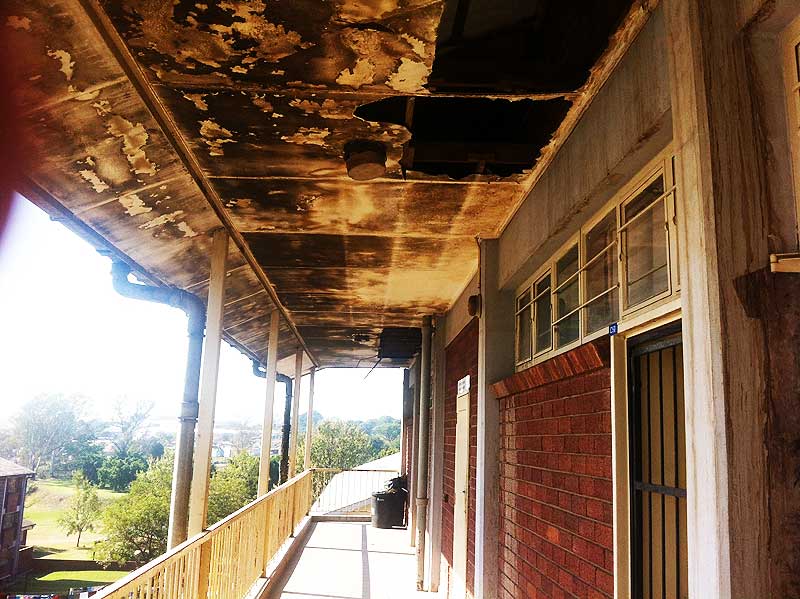
Above is a photography of asbestos containing
material and the damage to the eaves boarding. The eave boarding falls
regularly and at times whilst students are at school. The falling
sheeting generates airborne asbestos fibres. Asbestos Abatement is
planned but the problem is when. The school wants to operate whilst
removal occurs.
ASBESTOS
RISK TODAY
Asbestos has been banned from mining,
manufacturing and sale in South Africa for more than 10 years however
the risk still exists in old asbestos mining areas, when asbestos
removal occurs and where asbestos material has occurs or is buried and
the condition presents a health risk. Recent court cases in UK
have highlighted that more than half of the construction companies do
not check or request the site asbestos inventory or register and few
have sufficient knowledge on asbestos or asbestos material to identify
accurately the risk. South Africa has a similar problem and although we
are considering new Regulations on the Abatement of Asbestos this is
unlikely to change quickly. Unprotected asbestos exposure can be a long
term death sentence. In the UK more than 5000 persons die per year from
previous exposure to asbestos. Unlike South Africa the UK Inspectorate
and Local Authorities appear to be more active in apprehending
violators of the law. Recent court cases have resulted in heavy fines
and imprisonment for offenders. The basic issues identified were
- Use of unqualified persons or companies to perform
the assessment.
- The Assessors had no formal training in
occupational hygiene and asbestos
- Assessors have no recognized previous experience in
asbestos investigations or had not worked under a qualified person or
accredited Authority.
All persons who are employed to identify, evaluate asbestos, asbestos
material or asbestos containing material need to understand that they
have a duty of care to those persons who could or would use the
information they provide. Occutech has over the years seen many of
these reports where the Assessor has missed significant asbestos
issues.
A number of years ago Occutech was requested to provide a client an
Asbestos free certificate for an oil rig. The oil rig had been
inspected and had a certified but the ship owner was advised that the
Australian Government would not accept the document unless it had a
certified Occupational Hygienist signature. The document in question
had a signature of an Asbestos Assessor. Inspection of the oil rig
identified potential asbestos in compartment walls (sample analysis
confirmed asbestos), clutch pads and disc brake pads for crane and some
gaskets to be asbestos. These were all removed by the owner.
Another case was an industrial plant had been assessed for asbestos and
had a certificate from an Occupational hygienist that no asbestos was
on the manufacturing plant and only asbestos containing material was on
some of the buildings roofing .Occutech was requested to do an
Environmental Due Diligence for the new owner. The Due diligence
identified over 20 tons of asbestos (Crocidolite 100% Blue asbestos) in
the metal structure and roofing. The asbestos was used for fire
protection and in some areas plaster covered the structure.
Recently Occutech inspected a site where an Environmental Due Diligence
identified some asbestos containing material, rated the risk but failed
to identify or consider that a greater asbestos hazard was on the site.
The asbestos containing material identified were roof sheeting ,wall
panels ,guttering and downpipes the risk assessor rating determined
this to be high. No explanation of how the risk was determined was
provided. Although the asbestos material was not friable and exposure
would be limited except if removal occurred. The structure below was
risk rated High.
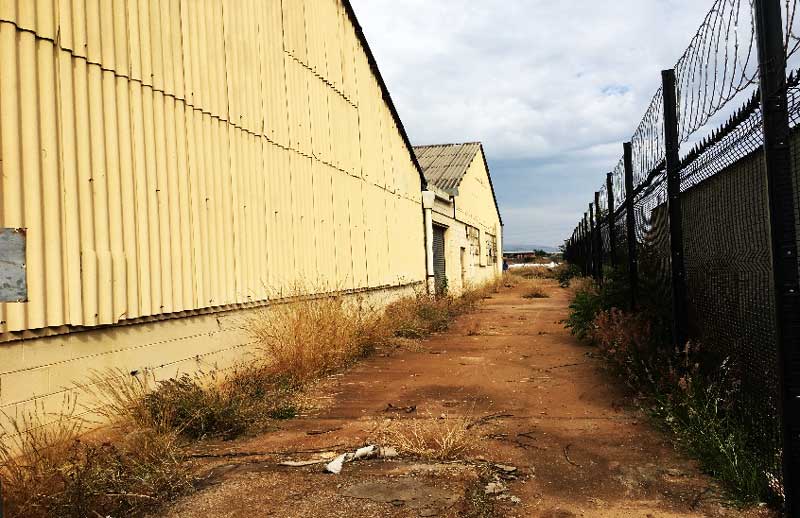
The greater hazard on this site was the site
ground level was raised and a previous tenant or owner had disposed of
his asbestos waste some of it raw asbestos –Crocidolite and chrysotile
under soil or beneath concrete flooring slabs. This Due Diligence
missed a significant hazard and potential risk to persons(employees)who
unknowingly disturb the buried waste and are now exposed to the risk
and also spread the asbestos fibres . The asbestos containing material
can be seen in the photography’s below
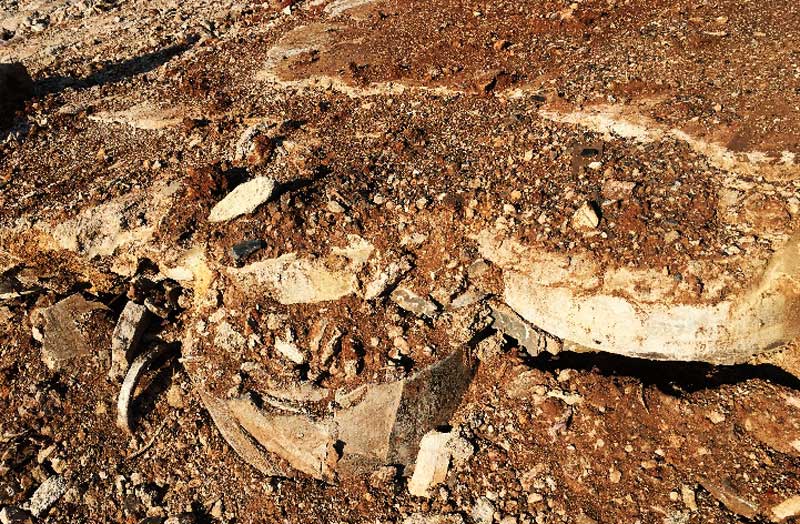

Asbestos material buried below top of ash and
then sand and then asbestos. The photography below shows asbestos
buried and opened by a contractor and left. Blue asbestos(Crocidolite)
in almost raw form was found in the asbestos buried and is easily seen
in the photography below.
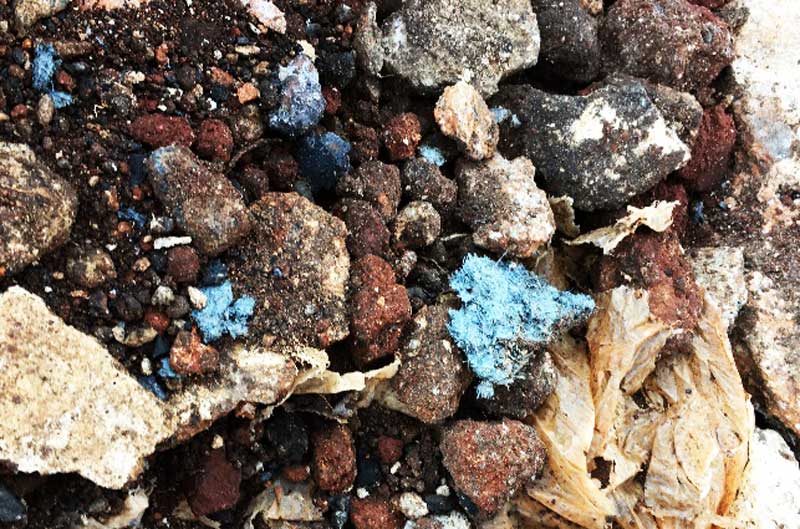
Legislators and Occupational Hygienists need to
embrace their responsibilities and ensure that those who have limited
or no knowledge on asbestos and its potential health risk are advised
and protected and to demand that only suitably qualified persons are
used to determine the risks and the precautions required .
Occutech is an Approved
Inspection Authority in Asbestos and is the oldest AIA in South Africa.
Occutech has trained occupational hygienists and others in asbestos and
performed numerous asbestos abatement and management projects
throughout Africa.
A copy of an Asbestos Inventory
|
No |
Area |
Types
of asbestos |
Condition |
Approximate
quantity |
Occupational
exposure |
Assessed
exposure risk |
Control
procedure in place |
|
1 |
OLD
ABLUTIONS |
ASBESTOS
CEMENT ROOF SHEETING |
Good |
100
m3 |
Limited
No work on asbestos |
Low |
Asbestos
Policy Asbestos
Inventory Asbestos
Management Plan |
PRIVACY POLICY II ANTI-SPAM II AUP II SECTION 51
